Today i want to showcase a custom order i made for a customer recently, as well as a triptich of blades i forged for the collection of blade-sculptures.
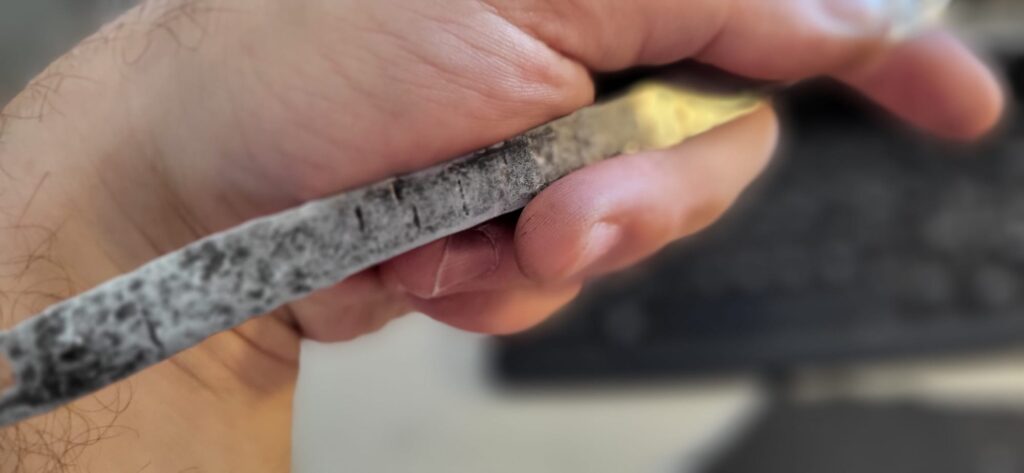
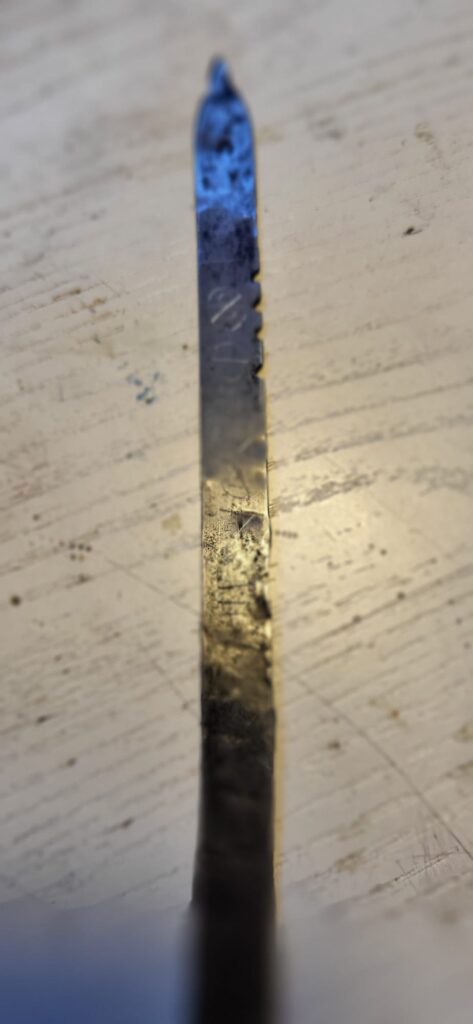
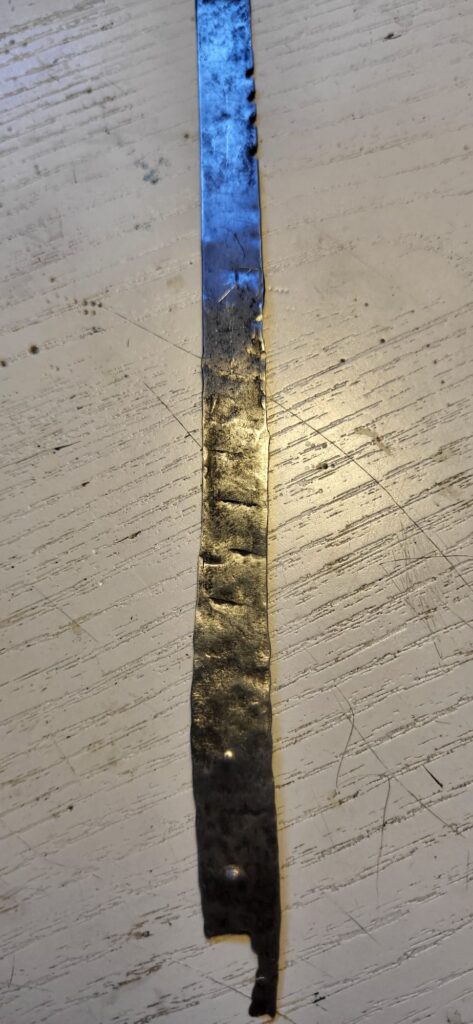
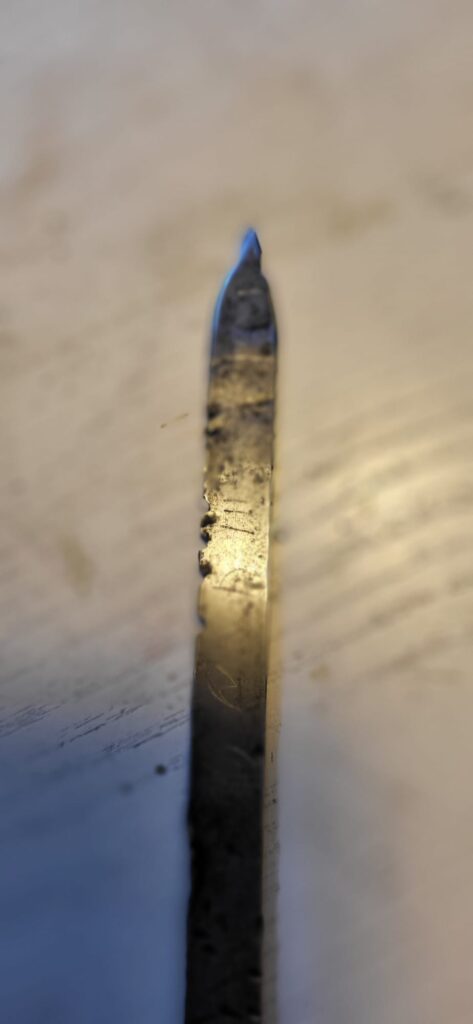
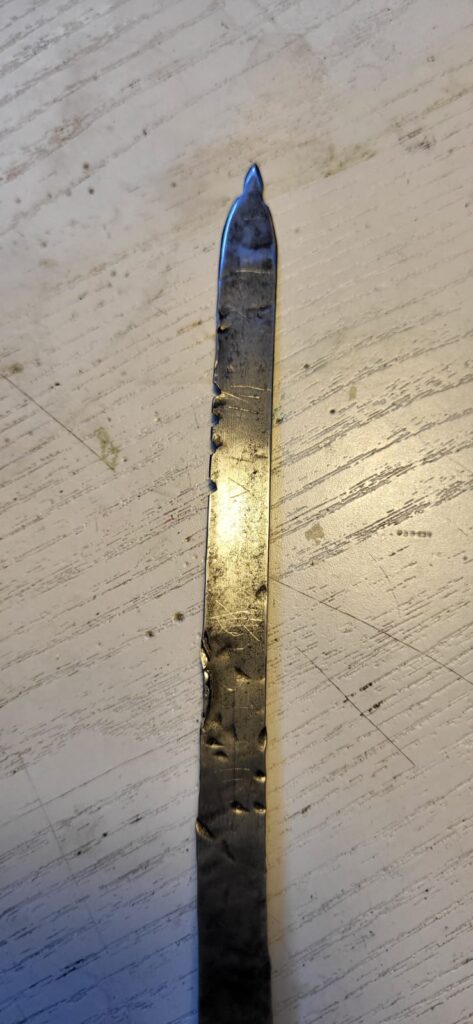
The custom order from a client, is a replica of a medieval german utility knife or dagger from the XV century, all steel construction. The piece is forged from reclaimed rebar steel and tempered with a quintuple quench, refining the material. Naturally, this piece is hand-engraved and etched in chisel and drypoint and has a custom sheath made with calf leather. It’s not only a replica of an antique original, but also a showpiece and the first work i made with my new forge and anvil. Many more to come!
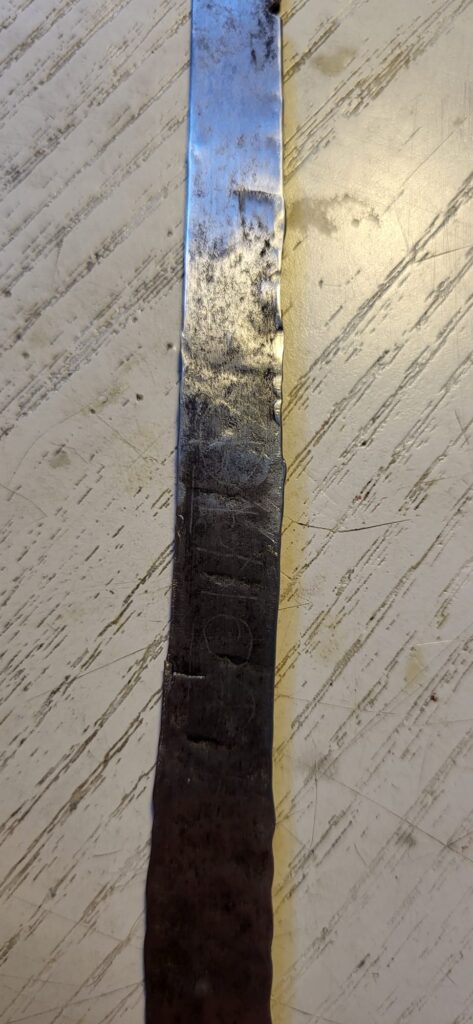
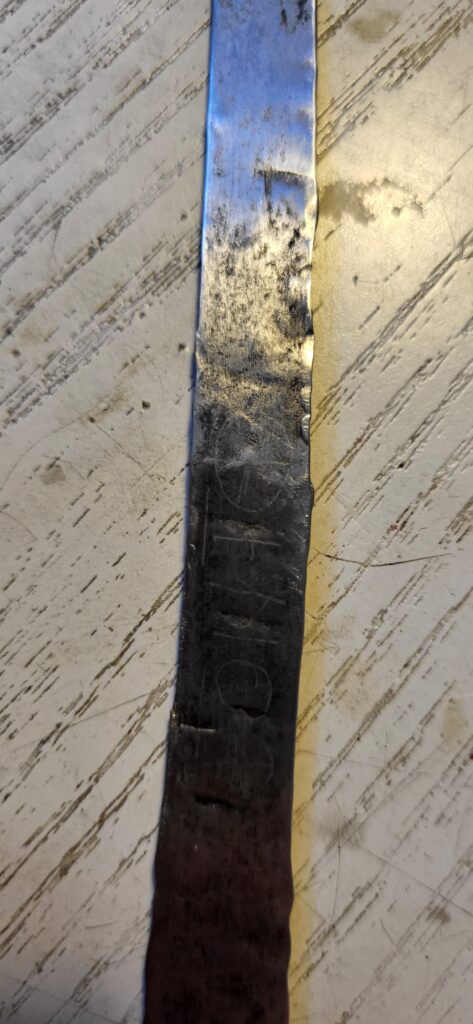
etching “MARIANO” the name of the future owner of this piece
blade complete with sheath and the chart showcasing the designs and symbols on the hilt
“BELLATOR”
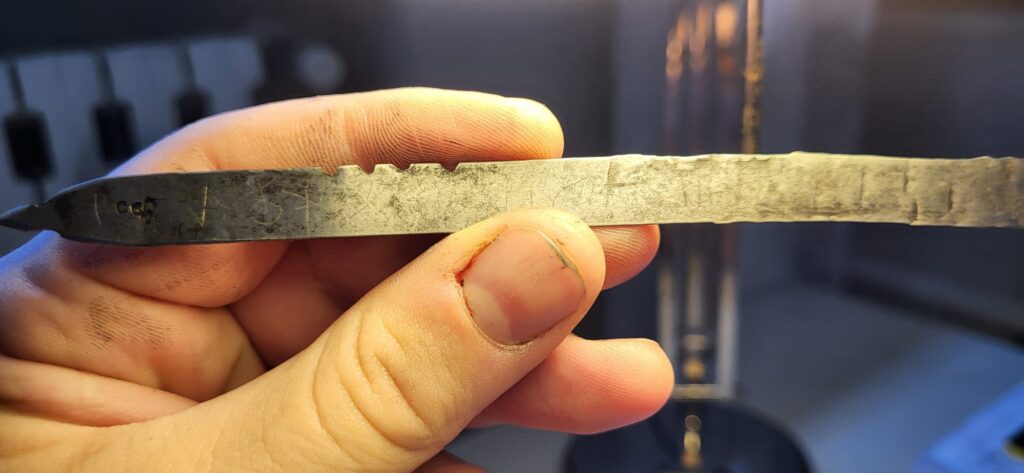
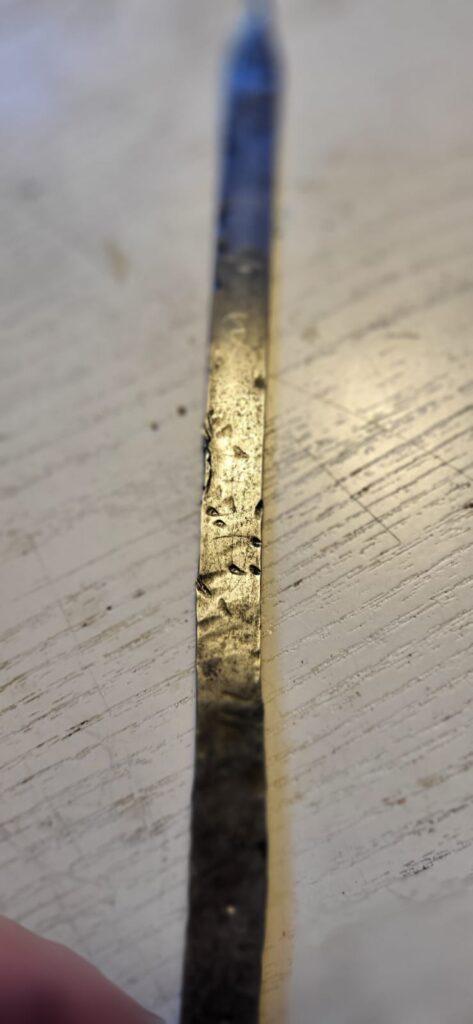
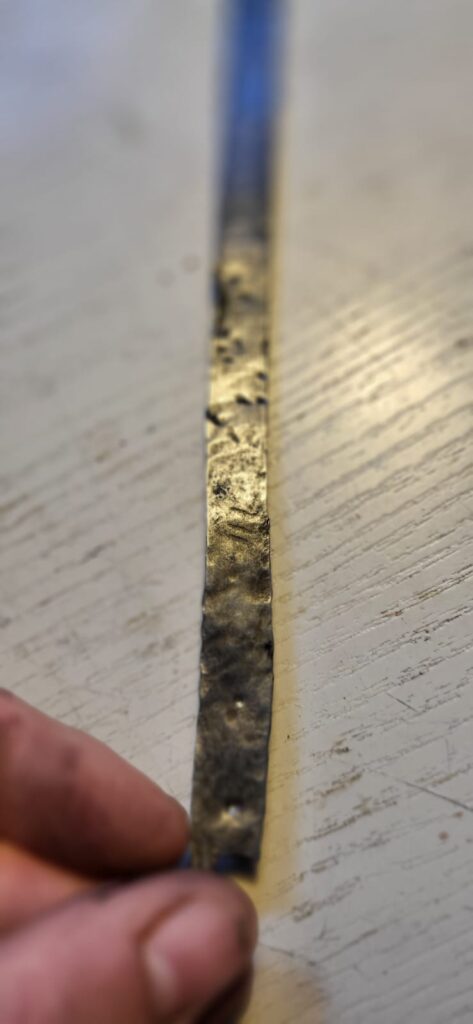
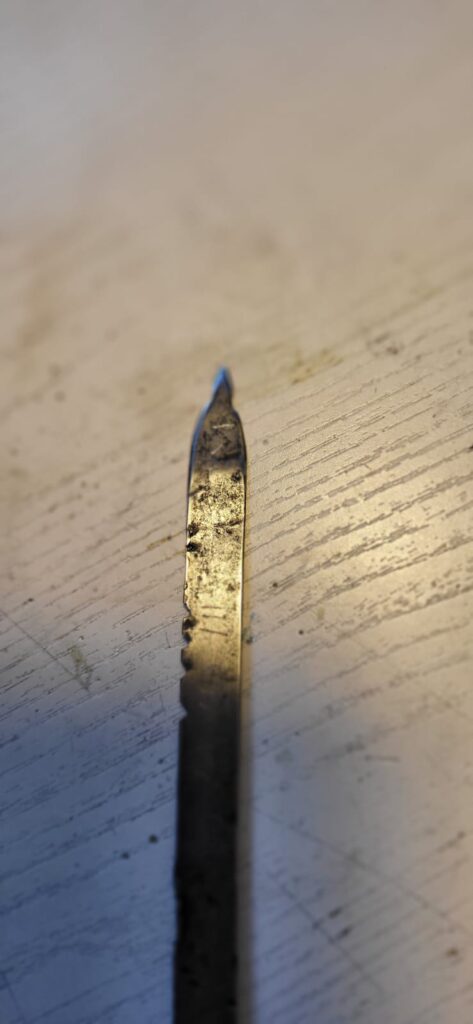
etching in drypoint and punching the design “+-B” on the blade
This piece has already been sold. It is one of a kind and no more copies of this particular dagger will be made, as its custom designs and etchings were specifically requested by the customer.
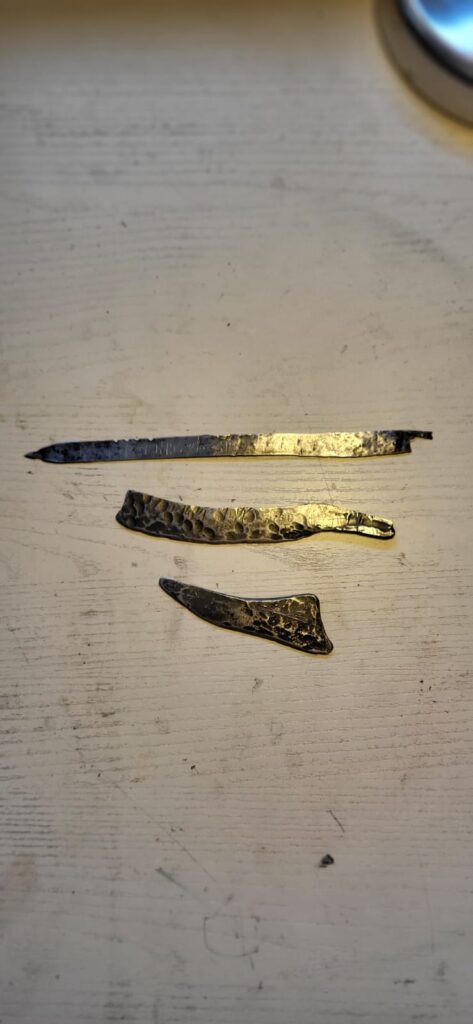
The following, is the triptich of knives I forged. These are the following:
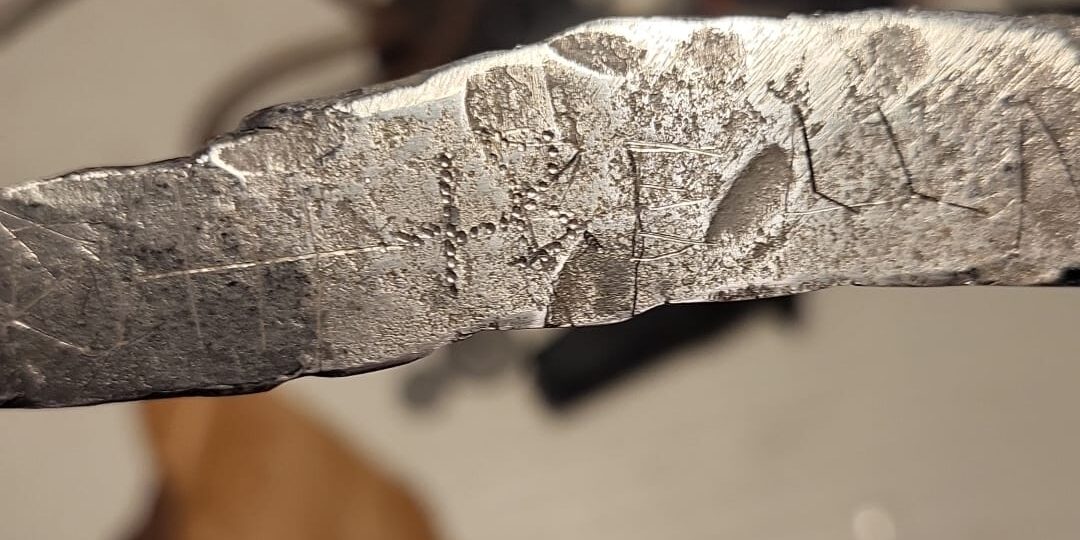
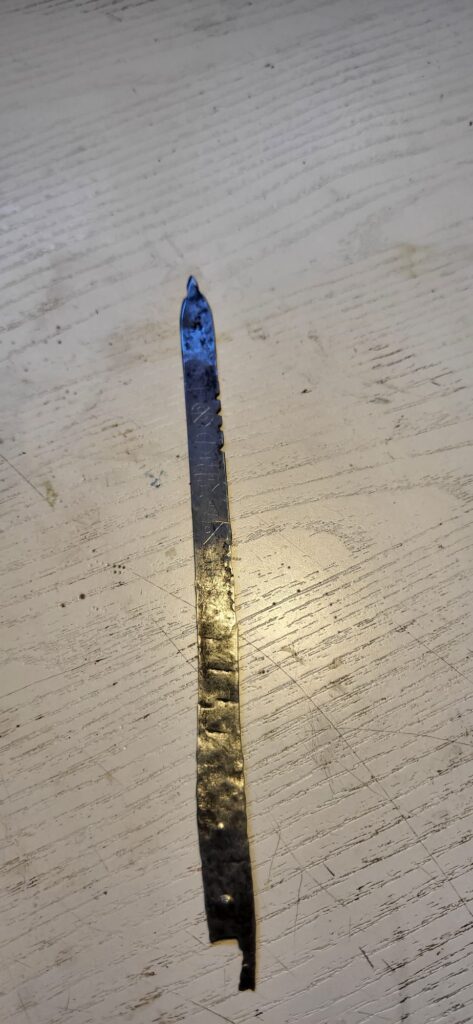
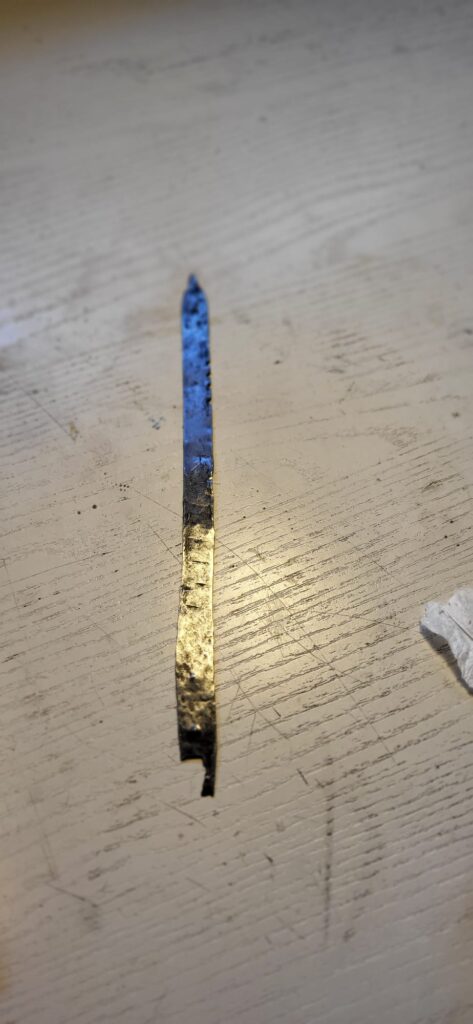
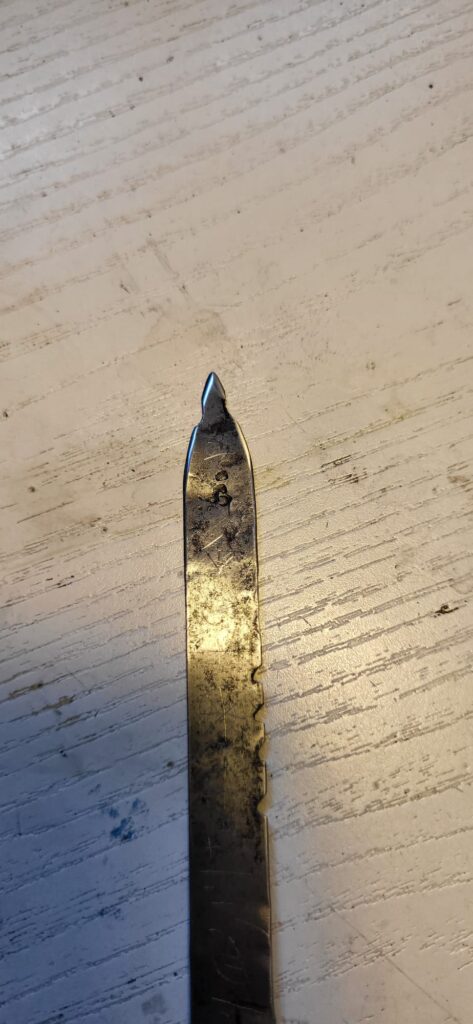
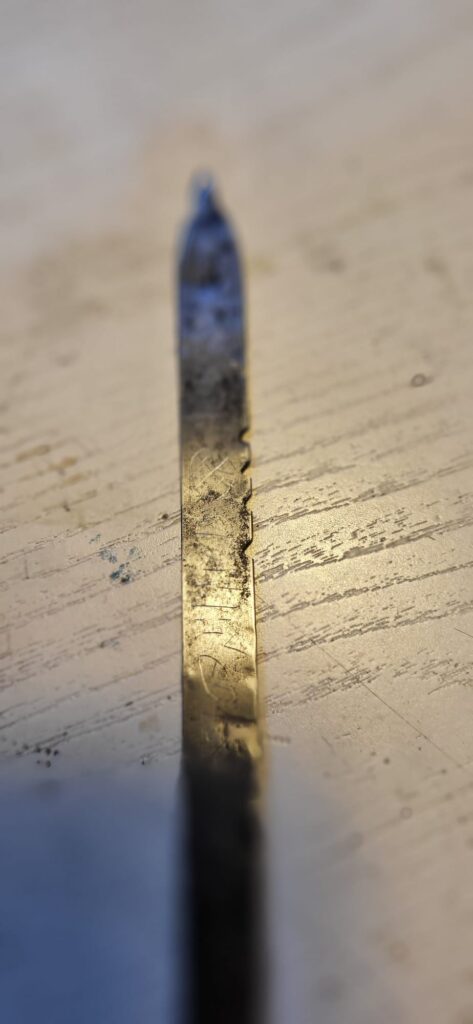
the shorter blades are hand-forged from calcium and carbon-enriched iron, turned into steel through the addition of bone powder. They are tempered and made to resemble traditional utility knives of the ancient and medieval traditions. The longer blade is very decorated, notched and engraved by acid and drypoint etching, with runes and norman symbols resembling those in frescoes in Salerno, Italy. The blade resembles traditional italian dueling knives (such as the sicilian “liccasapuni” or the neapolitan “zompafuosso”). To exhalt the etchings on the blade, the “niello” technique has been used to blacken the intaglio;
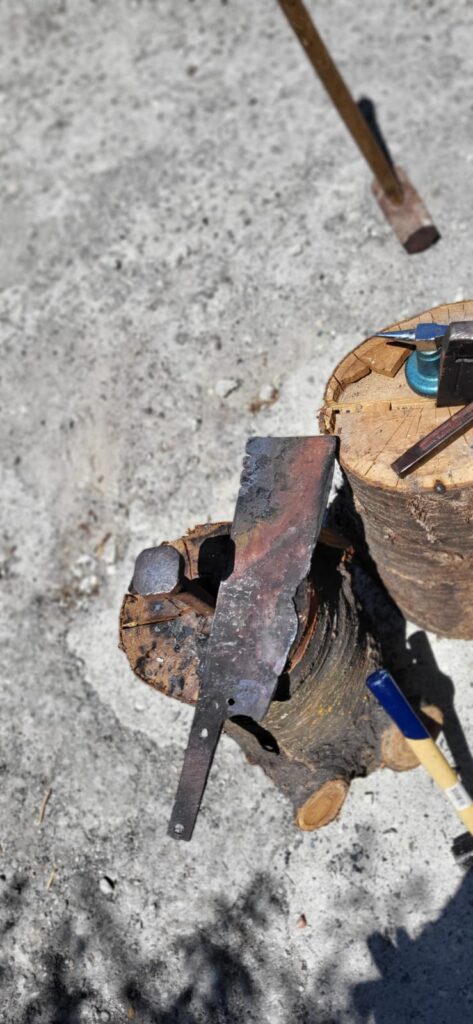
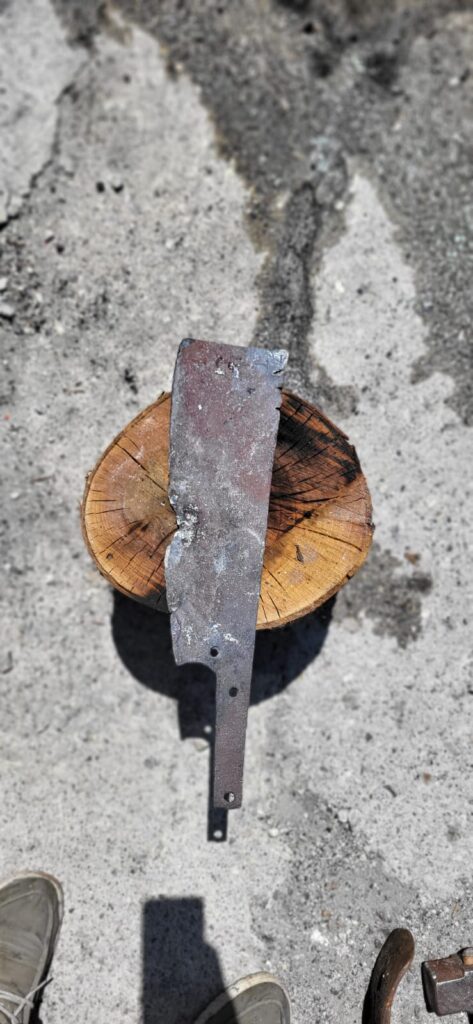
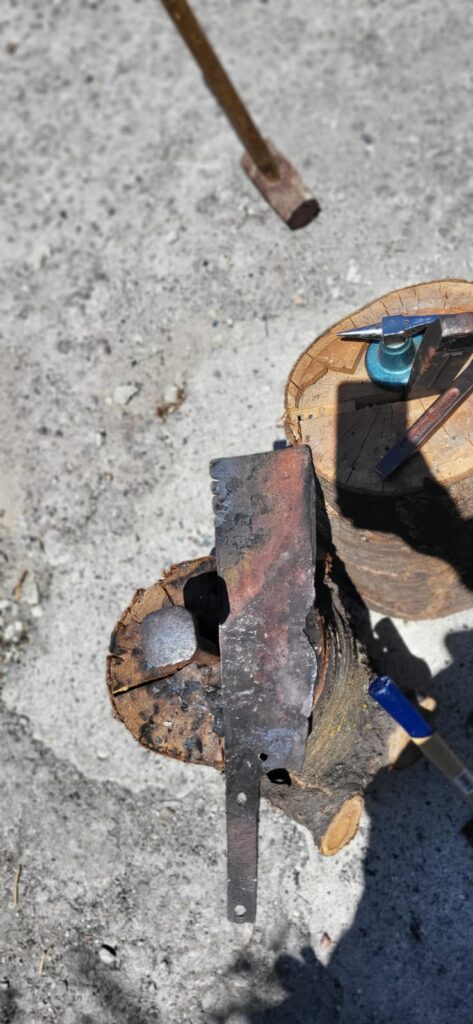
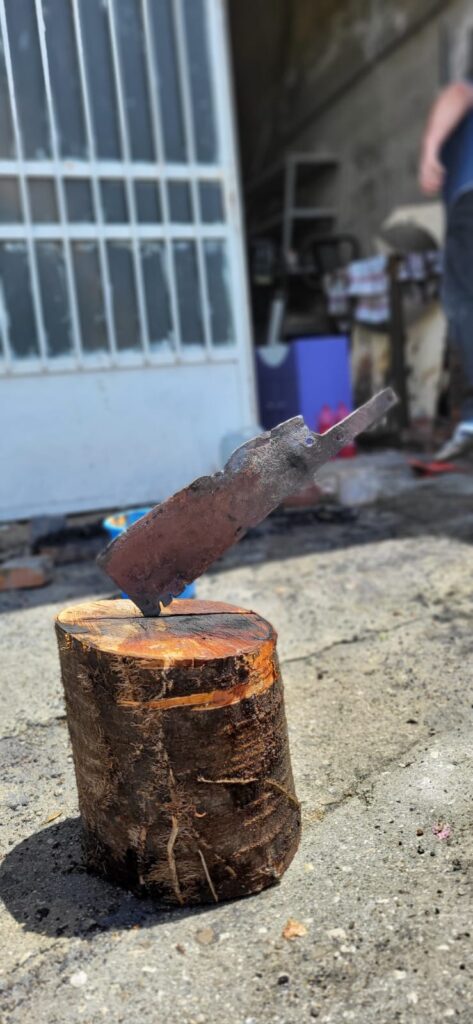
Maciejowski style falchion, forged from an old butcher’s cleaver (unknown steel/iron)
working the forge in the making of the piece
this one-handed variant is forged as a replica of the iconic “godenak” or “bat-wing”-bladed sword from the illuminated manuscript known as the Maciejowski bible. It has been a tough one to make….
weapons such as these were common during the earlier medieval period, in which the line between agricultural tool and weapon of war was blurred…
the piece is purposefully corroded to create an aesthetic effect as with most of the other iron and steel forged blade sculptures. It measures approximately 50 cm in length and weighs 1.4 kg. The material is reclaimed steel.
this more traditional type of medieval falchion sword is an art piece which has already been sold to a private collector. It is free for display. It has a carbon steel froged blade with a fuller and a clipped point, a curved guard and a hook instead of a pommel, to re-evoke the traditional falchion tools of northern italy, like the Piedmontese Beidana; the handle scales are burnt and oiled pine wood, the entirety of the sword has been blackened with burnt linseed oil to preserve it and give it an elegant and exclusive look. It measures approximately 1 meter long and weighs at about 1.3 kg.Lombard spatha, hand-forged from C40 blacksmith’s steel, hand-etched in drypoint and chisel, and polished to create a chromatic dichotomy between the corroded and rusted forged part and the polished and clean etched part. This piece is still in the making, not yet finished.
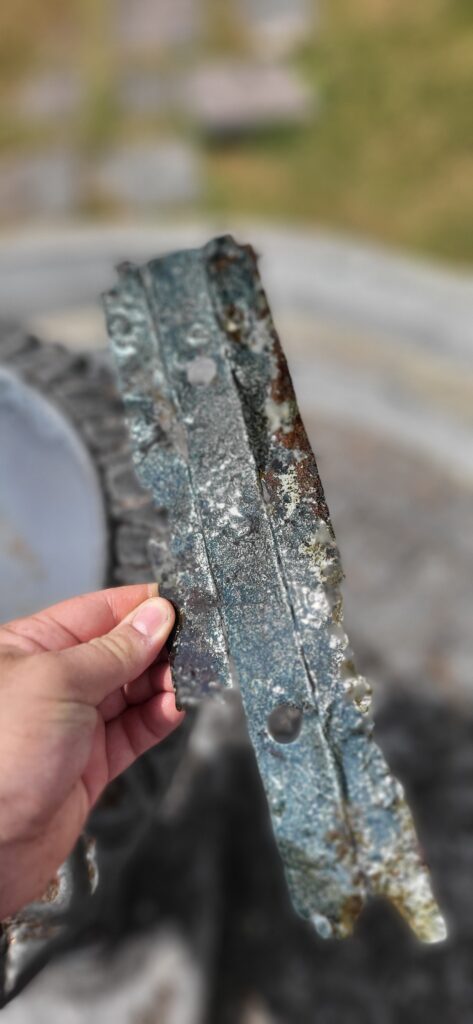
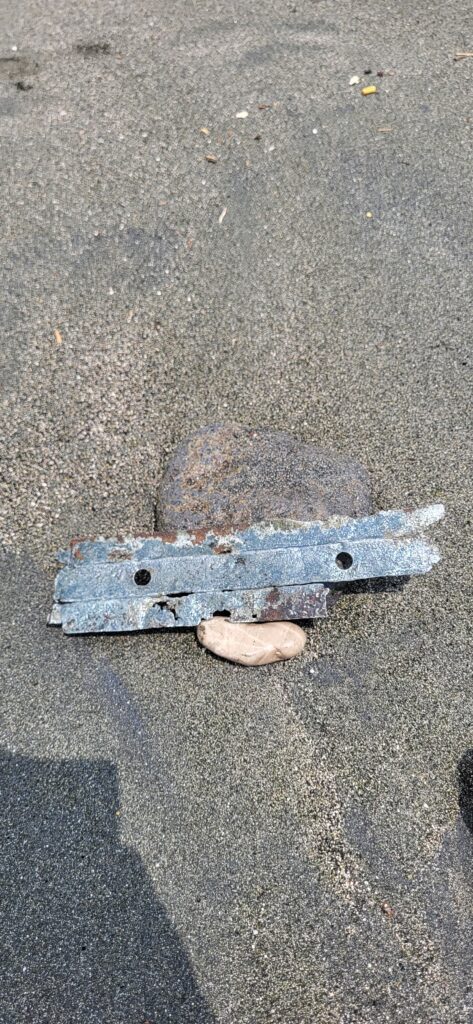
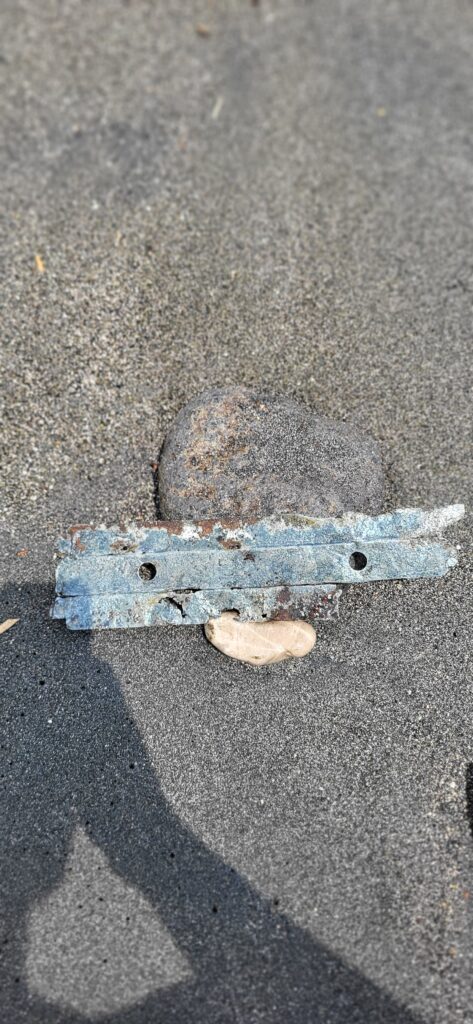
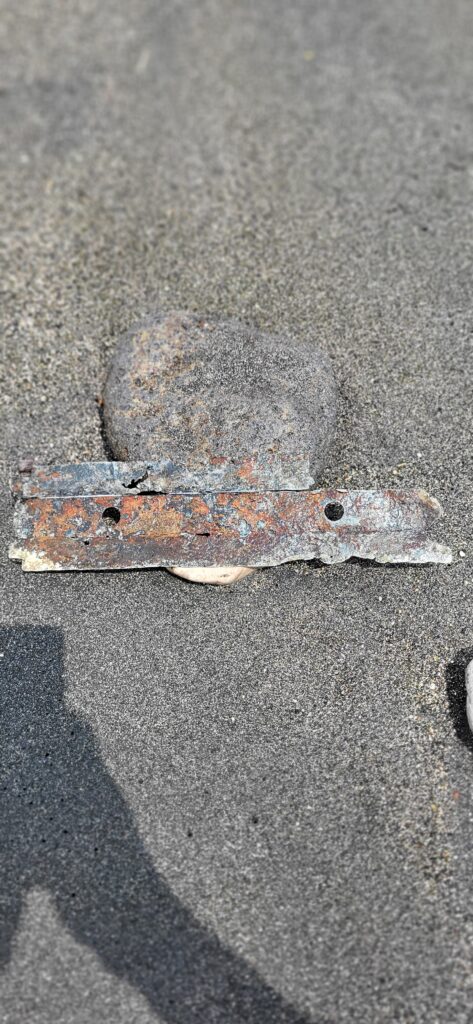
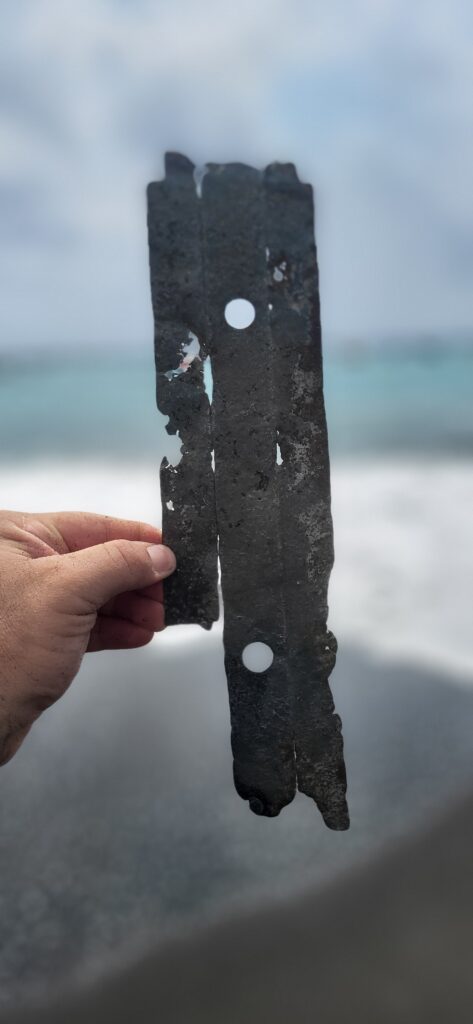
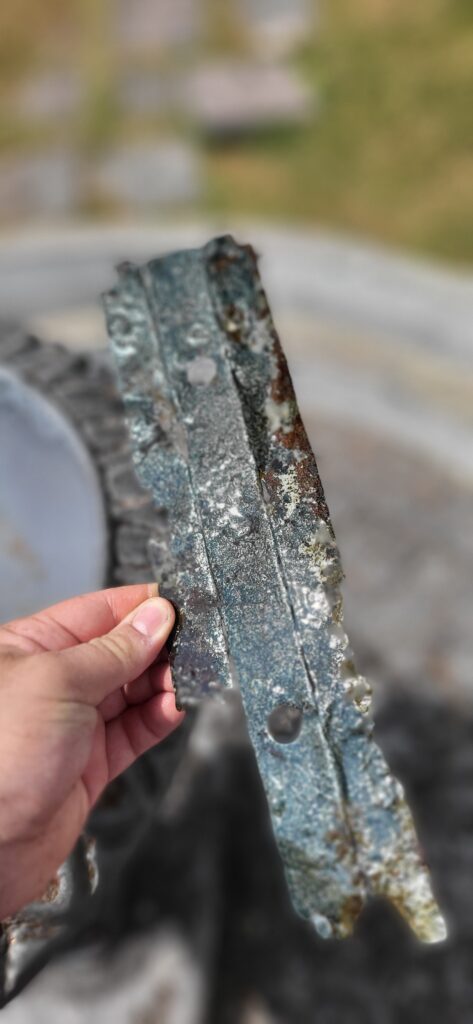
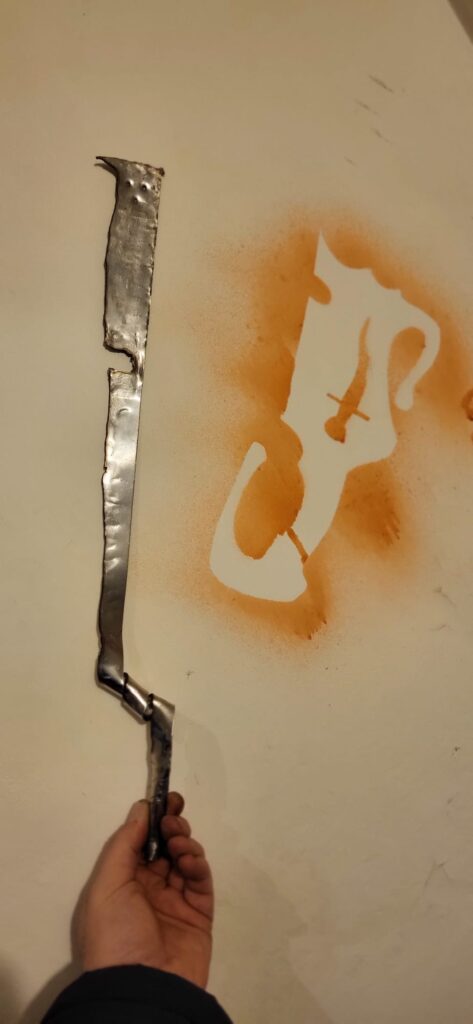
Copper dagger, inspired by an asbestos scimitar-shaped shard i found on the beach as a child. Cold-hammered, punched, hand-decorated.
Oggi è accaduto un grande miracolo. Ero sulla riva, in riva alle onde del mare, pensando che sarebbe stato magico se una spada fosse apparsa dalle onde e fossi riuscito a impossessarmene. Il mare era furioso. La marea era alta. Poi, come per magia, nel preciso istante in cui avevo concepito quel pensiero, ho sentito qualcosa toccarmi la caviglia. La marea mi aveva donato questo meraviglioso tesoro: l’acciaio. Corroso, vecchio, arrugginito e di una forma insolitamente bella. Come i mistici fabbri del Giappone feudale, ho preso la mia materia prima dal mare. Sono pronto a forgiarla in un Tantō.
The Japanese Tantō blade will be forged from this driftmetal iron plate and will be quenched with traditional japanese techniques….La lamiera in ferro arrugginito recuperata dal mare è stata forgiata a freddo e punzonata, trasformata in una lancia in ferro che riprende le forme delle “sarisse” greche oplitiche. Fa ora parte di un’opera, elemento di un trittico per la mostra “Segni di Appartenenza Archemporanei” al museo archeologico di Nocera Inferiore.dettaglio di ascia decorativa con punzonatura di motivo “ad occhio raggiante massonico/egizio”;ascia decorativa, legno intagliato, tinto a vino e brunito e ferro forgiato e punzonato. Opera realizzata a “i Cortili della Storia” di Sant’Egidio del Monte Albino, 2025;lancia grezza in ferro, legno, cuoio. Forgiata a mano e punzonata con motivo a foglia e croce di Gerusalemme. Opera creata all’evento “i Cortili della Storia” di Sant’Egidio del Monte Albino.roncone inastato forgiato e punzonato, lamiera di ferro
falcione dalla bibbia Maciejowski, scultura artistica parietale in acciaio inox forgiato e tagliato a mano
prototipo di armatura a maglie ad anelli per il costume di OMEN (ferro, acciaio zincato – 11/10/2025)
lama d’acciaio inox forgiata, ritorta, ribattuta e punzonata – “Beidana”
la sagoma della lama è vagamente ispirata a questo modello di Messer dal trattato di Hans Talhoffer, sebbene il modello da me forgiato sia più corto e compatto.
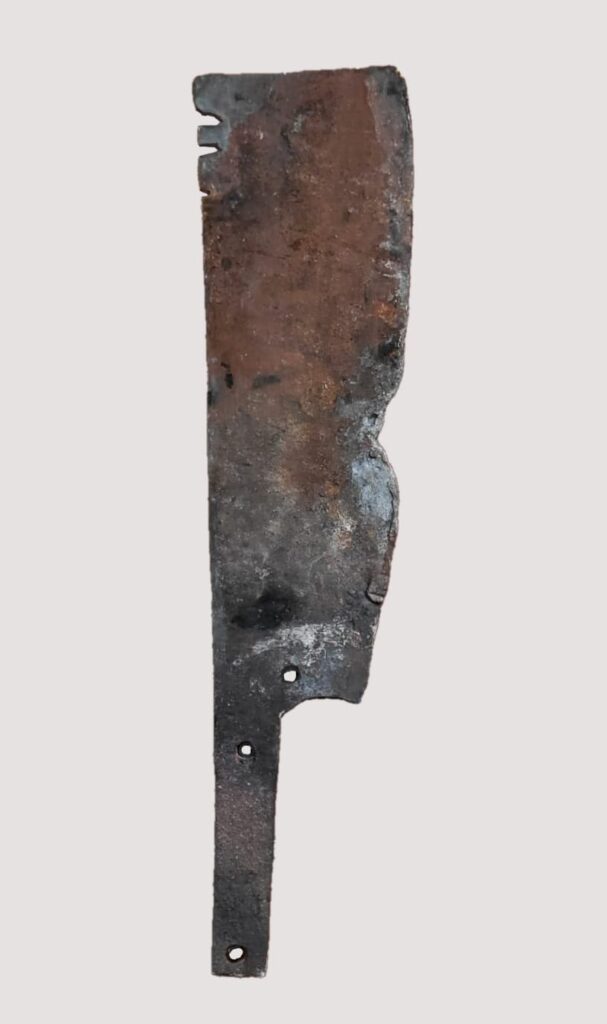
Bauernwehr/Rugger tedesco, forgiato a mano con acciaio di recupero da una vecchia lama antica arrugginita di mannaia. Lama lavorata a flex e forgiatura, incisa e immanicata con impugnatura in legno d’ulivo.
25 | 05 | 2026 – LA RICERCA SULLE LAME CONTINUA:
L’ultima esplorazione scultoreo-orefice della matericità della lama mi ha portato all’utilizzo del materiale del vetriolo blu (solfato di rame) per placcare e intarsiare il ferro delle spade in modo da rivestirle nobilitandole col rame, in un processo alchemico di VITRIOL-izzazione. Qui di seguito i pezzi su cui è stata eseguita la procedura di ossidoriduzione rameica:
dettaglio della placcatura del vetriolo su ferrofalcione placcato in rame col vetriolo bluInstallazione della “foresta di lame/ macelleria paleocristiana” fatta di spade in ferro, rame e acciaio
Le lame sono lavorate con un tripudio di tecniche di forgiatura, incisorie e di oreficeria, così come tecniche chimico-alchemiche (acidatura, ossidoriduzione, ossidazioni controllate tramite morsure forti brevi);